
Need help submitting the form?
If you're facing any issues, our team is ready to help you directly via WhatsApp or Email.
The must-sees are the Pyramids of Giza and the Grand Egyptian Museum in Cairo, Karnak and the Valley of the Kings in Luxor, the temples of Edfu and Kom Ombo, Philae in Aswan, and Abu Simbel. A Nile cruise ties the southern ones together.
Egypt unfolds from north to south, and the order matters. Cairo comes first: loud, enormous and impossible to ignore, with the Giza plateau sitting right at the edge of the city. Then the pace drops. Luxor is a river town with temples so large that a single column dwarfs you, and from there the Nile carries you slowly south past farmland, palm groves and mud-brick villages to Aswan, where the river turns calm and the light turns gold in the evening.
|
Place |
Why go |
Time needed |
Best for |
|---|---|---|---|
|
Pyramids and Sphinx, Giza |
The last surviving wonder of the ancient world |
2–3 hours |
Everyone, first thing in the morning |
|
Grand Egyptian Museum, Giza |
Tutankhamun's full collection under one roof |
3.5–4 hours |
Museum lovers and families |
|
Karnak and Luxor Temple, Luxor |
The Hypostyle Hall and a temple lit at night |
3–4 hours |
Temple fans and photographers |
|
Valley of the Kings, Luxor |
Painted royal tombs cut into the cliffs |
Half a day with Hatshepsut's temple |
History buffs |
|
Edfu and Kom Ombo |
Two well-preserved temples on the riverbank |
1–2 hours each |
Anyone on a Nile cruise |
|
Philae, Aswan |
An island temple of Isis |
1–2 hours |
Quiet-pace travelers |
|
Abu Simbel, near Aswan |
Ramesses II's colossal rock-cut temple |
Full day |
Anyone who likes a big payoff |
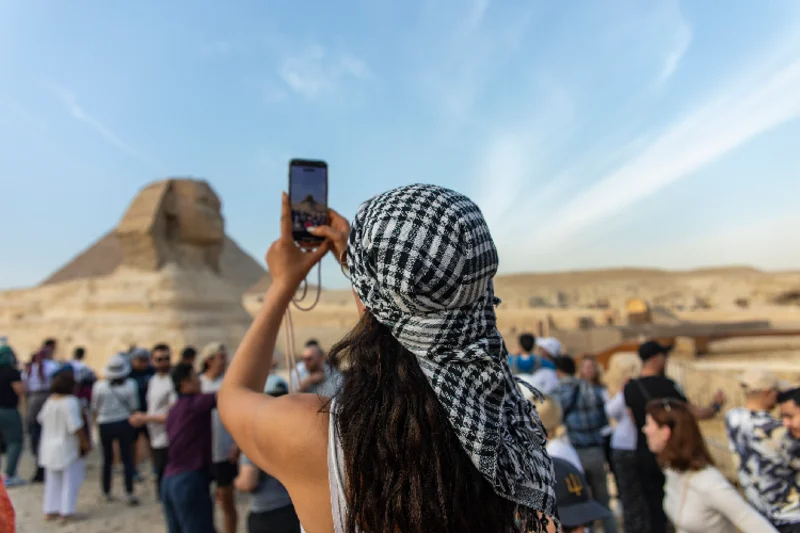
The Pyramids of Giza are worth every minute, and 2–3 hours on the plateau covers all three pyramids, the Sphinx and the best viewpoints. Arrive at opening, before the heat and the tour buses.
The road from central Cairo runs through ordinary city streets, then the Great Pyramid appears at the end of a side road, far bigger than any photograph suggests. Built for Khufu around 4,500 years ago, it is made of blocks you can touch, and most visitors end up standing beside the base for a while, saying nothing. Khafre's Pyramid looks taller because it sits on higher ground, Menkaure's is the smallest of the three, and the Sphinx, carved from the bedrock of the plateau, is lower and closer to the edge than people expect.
Going inside the Great Pyramid is a separate ticket with limited numbers. The passage is steep, narrow and hot, and the burial chamber at the end is bare apart from a granite sarcophagus. It is memorable, but not for anyone who dislikes tight spaces. Camel and horse rides are sold separately at the plateau, so agree the price and the length of the ride before you climb on.
|
Opening hours |
Ticket price |
Time needed |
How to get there |
Best time |
|---|---|---|---|---|
|
Around 8:00–17:00, varies by season |
Plateau around EGP 600 (≈$12); Great Pyramid interior around EGP 900 extra (≈$18) |
2–3 hours |
About 40 minutes by car from downtown Cairo |
Opening time, October–April |
Nile Cruise Vacation Expert Tip: Bring a hat and your own water before you enter the plateau. There is almost no shade, and drinks near the gate cost more. Politely decline anything offered as a free gift or photo, because a request for payment usually follows.
Don't miss
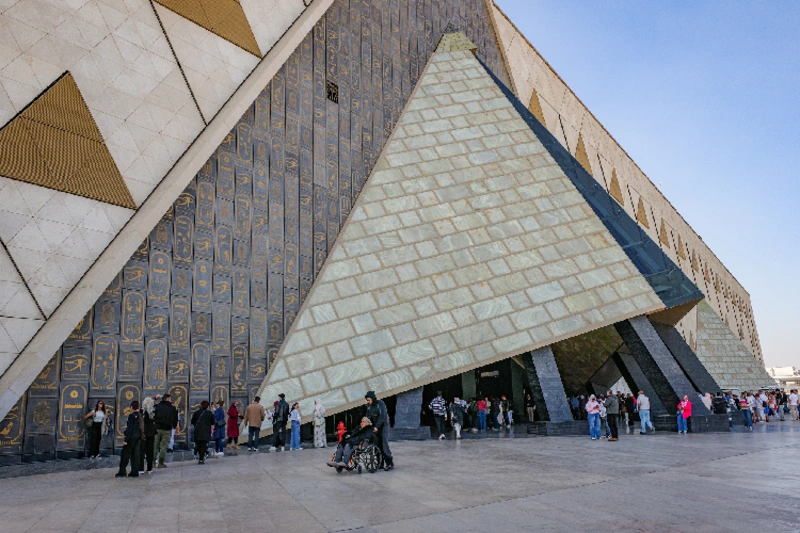
The Grand Egyptian Museum is the best museum visit in Egypt, and you need 3.5–4 hours. Tourist tickets are sold online only, for a set time slot, so book before you fly.
The museum opened to the public in November 2025 after roughly two decades of building, and it sits on the edge of the Giza plateau. You walk in under an 11-meter granite statue of Ramesses II, then climb the Grand Staircase past more than 60 colossal statues, with the pyramids appearing through the glass at the top.
The main event is the Tutankhamun galleries, where more than 5,000 objects from the boy king's tomb are displayed together for the first time since Howard Carter opened it in 1922. The gold mask is the famous piece, but the throne, chariots and everyday objects tell you more about how he lived. Khufu's solar boat, more than 4,500 years old, has its own hall. The Royal Mummies are not here: they are at the National Museum of Egyptian Civilization in Old Cairo, which makes a good half-day on its own.
|
Opening hours |
Ticket price |
Time needed |
How to get there |
Best time |
|---|---|---|---|---|
|
Grounds around 8:30–19:00; galleries around 9:00–18:00 |
Around EGP 1,450 for foreign adults (≈$30), booked online |
3.5–4 hours |
10 minutes from the Giza plateau; 30–45 minutes from central Cairo |
The 9:00 slot |
Nile Cruise Vacation Expert Tip: Book the first slot of the day and go straight to the Tutankhamun galleries. The first two hours are the quietest, and by about 11:00 the tour groups arrive and the rooms fill up.
Don't miss
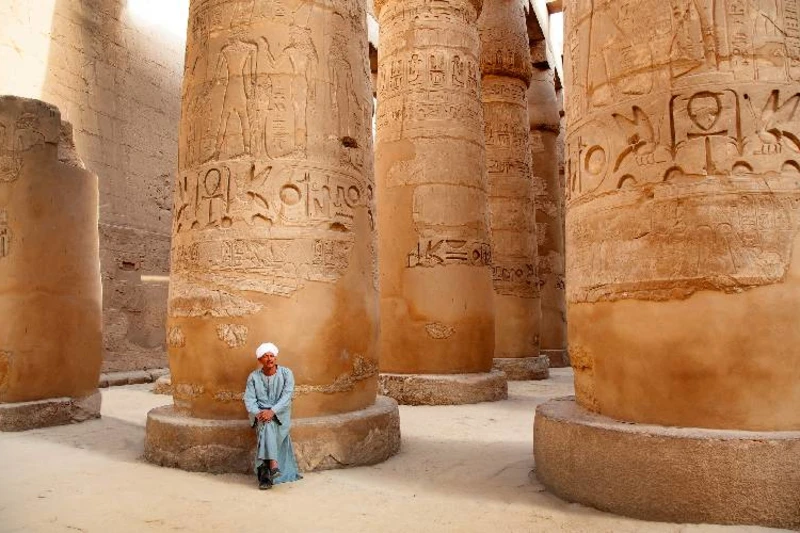
Luxor is where Egypt's temple-and-tomb story gets deep, and two days is the sweet spot. Spend one day on the East Bank at Karnak and Luxor Temple, and one on the West Bank at the Valley of the Kings.
Karnak is a whole district of temples, built and added to over roughly 2,000 years. The Great Hypostyle Hall is the part that stops people mid-sentence: 134 stone columns, still carved with reliefs, standing in rows that block out the sky. Luxor Temple is smaller and sits in the middle of town, and it looks its best at dusk when the floodlights come on. The restored Avenue of Sphinxes now links the two on foot.
Across the river, the Valley of the Kings is a dry, pale wadi where 63 royal tombs have been found. The tombs are small inside, but the painted walls are vivid, and you walk down sloping corridors into rooms that look freshly decorated. Nearby, Hatshepsut's temple at Deir el-Bahari rises in three white terraces against the cliff, and a sunrise balloon flight over the West Bank is the classic way to see it all at once.
|
Site |
Opening hours |
Ticket price |
Time needed |
Best time |
|---|---|---|---|---|
|
Karnak Temple |
Around 6:00–17:30 |
Around EGP 600 (≈$12) |
2–3 hours |
Opening time |
|
Luxor Temple |
Morning to evening |
Around EGP 500 (≈$10) |
About 1 hour |
Dusk |
|
Valley of the Kings |
Around 6:00–17:00 |
Around EGP 600 for 3 tombs (≈$12); Tutankhamun's tomb around EGP 700 extra (≈$14) |
2–3 hours |
Early morning |
Nile Cruise Vacation Expert Tip: Tombs in the Valley of the Kings open on a rotating basis, so choose your three on the day. Tutankhamun's tomb is a small, plain chamber and costs extra, so it is worth it mostly for the story, not the scale.
Don't miss
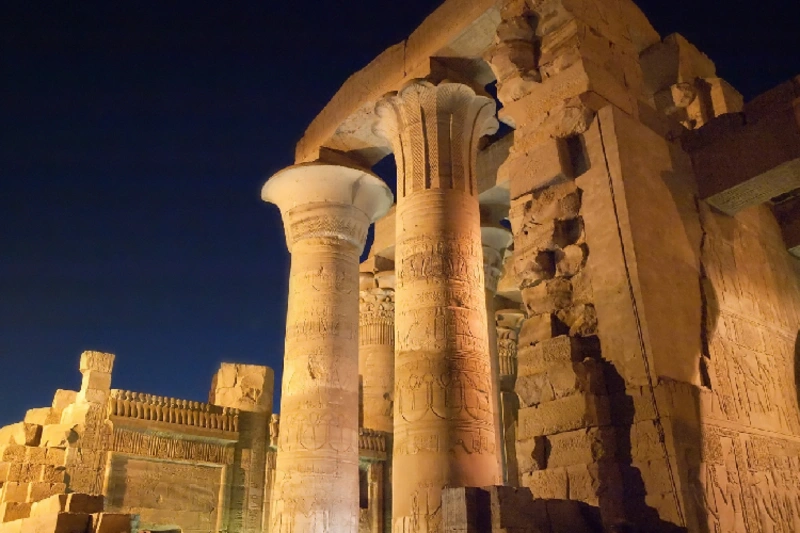
Between Luxor and Aswan, the river passes the temples of Edfu and Kom Ombo, then reaches Aswan with Philae and the High Dam. A 3–4 night cruise stops at the main ones with a guide.
This is the stretch that makes a Nile cruise special. Edfu has the Temple of Horus, one of the best-preserved temples in Egypt, and many ships take a horse-drawn carriage from the dock to reach it. Kom Ombo sits right on the bank, a twin temple built for two gods, with a small display of mummified crocodiles nearby. At Aswan, Philae, the temple of Isis, was moved stone by stone to its island and is reached by a short boat ride, and the High Dam, built in the 1960s, shows how the river was tamed.
Aswan finishes the journey gently. A felucca sail around the granite islands in the evening is the standard way to end it, and afternoon tea at the Old Cataract Hotel, made famous by Agatha Christie's Death on the Nile, is a classic treat if your schedule allows.
Quick facts: Edfu is usually open around 7:00–17:00, Kom Ombo around 8:00–17:00 and Philae around 7:00–16:00. Entry is often included in cruise packages. Allow 1–2 hours at Edfu and Philae and about 1 hour at Kom Ombo, with Edfu and Philae best in the morning and Kom Ombo in late afternoon.
Nile Cruise Vacation Expert Tip: Ships often dock side by side at Edfu and Kom Ombo, so you may walk through another ship's lobby to reach the shore. Go straight to the exit when your guide calls, and you will be among the first at the temple gate.
Don't miss
Abu Simbel is worth the early start, but it is a long day: about three hours each way by road from Aswan, plus one to two hours at the temples. Fly if you would rather keep the time.
The four seated statues of Ramesses II on the facade are around 20 meters high, and they are bigger and sharper in person than in any photograph. The whole temple was cut up and rebuilt on higher ground in the 1960s to save it from the rising waters behind the Aswan High Dam, which is a story worth hearing from a guide on the way. Inside, the hall leads deep into the rock to a sanctuary that the sun reaches on two days of the year, around February 22 and October 22. The smaller temple next door was built for Ramesses II's queen Nefertari and the goddess Hathor.
|
Opening hours |
Ticket price |
Time needed |
How to get there |
Best time |
|---|---|---|---|---|
|
Early morning to late afternoon |
Around EGP 820 for foreign adults (≈$17) |
1–2 hours on site |
Road from Aswan, about 3 hours each way; or a short flight |
Early morning, October–April |
Nile Cruise Vacation Expert Tip: If the 3 a.m. alarm does not appeal, take the short flight from Aswan. You land, see the temples and are back for lunch, and the extra cost is often less than a day of lost sightseeing.
Don't miss
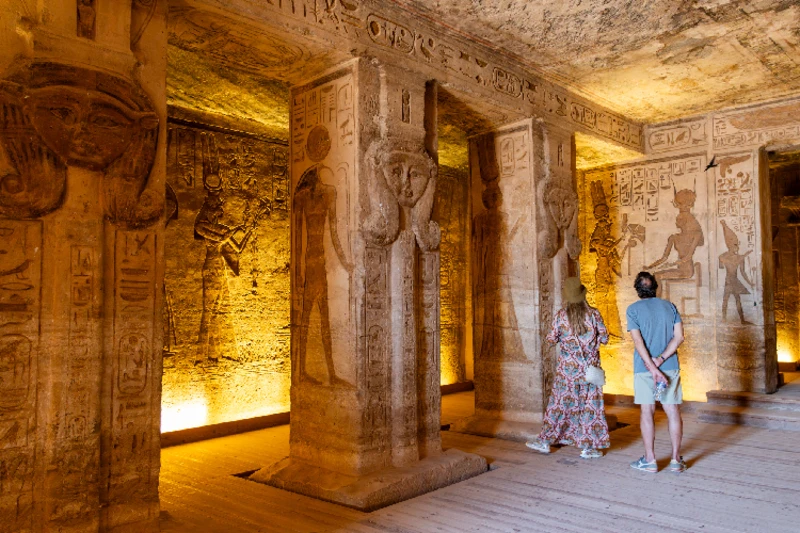
For most travelers, yes. A Nile cruise combines transport, hotel, meals and guided temple visits in one price, and you unpack only once between Luxor and Aswan.
The rhythm is what people remember. Mornings go to a temple with your guide, afternoons to the sundeck as farmland and villages slide past, and evenings to dinner on board as the river turns dark. A land-only trip covers the same temples, but it needs a driver, extra hotel nights and more planning, and it often costs more per day for what you see.
|
Nile cruise |
Land-based (hotels and drivers) |
|
|---|---|---|
|
Pace |
Relaxed, sightseeing built in |
Faster, more flexible |
|
Packing |
Unpack once |
Change hotels every night or two |
|
Temples between Luxor and Aswan |
Edfu and Kom Ombo are on the route |
Needs a driver and extra time |
|
Around price per person |
$200–$400 standard, $400–$600 mid-range, $600–$1,500 luxury (3–4 nights) |
Varies with hotels and private drivers |
|
Best for |
First-timers, couples, families |
Independent travelers, short trips |
Nile Cruise Vacation Expert Tip: Ask exactly what the price covers. Packages with entry tickets, guides and transfers included are the ones that avoid surprise costs, especially for optional extras such as balloon flights and sound-and-light shows.
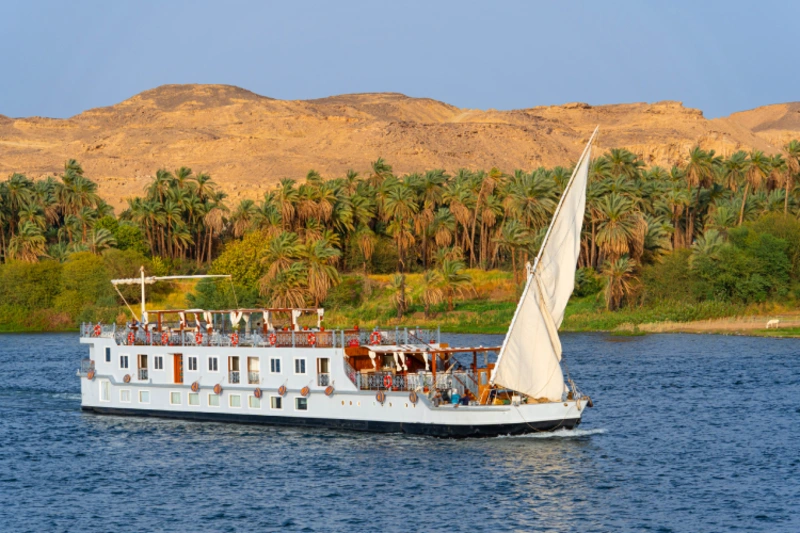
In 3 days you can do Cairo properly, in 5 days you can add a short Nile cruise, and in 7 days you can add a full Luxor to Aswan cruise and Abu Simbel. Fly between Cairo and Upper Egypt rather than driving.
|
Days |
Route |
What you see |
|---|---|---|
|
3 days |
Cairo and Giza |
Day 1: Giza plateau and Grand Egyptian Museum. Day 2: Old Cairo, the Royal Mummies and Khan el-Khalili. Day 3: Saqqara and the Step Pyramid |
|
5 days |
Cairo and a 3-night cruise |
Day 1: Giza and the Grand Egyptian Museum. Day 2: fly to Aswan and board. Days 3–4: Kom Ombo, Edfu and sailing. Day 5: Luxor and Karnak, then fly home |
|
7 days |
Cairo, Luxor and Aswan |
Days 1–2: Cairo. Day 3: fly to Luxor, Karnak, board. Day 4: Valley of the Kings, then sail. Day 5: Edfu and Kom Ombo. Day 6: Aswan and Philae. Day 7: Abu Simbel before your flight |
The 7-day version is the one most travelers end up wanting. It covers the headline sites without feeling like a race. Our 7-day Egypt package follows this route, and our First Time in Egypt guide covers hotels, costs and transfers.
The best time to visit Egypt for sightseeing is October to April, and February–March and October–November are the sweet spots. Summers are very hot in Luxor and Aswan.
October–November and February–March are the sweet spots, with comfortable temperatures, good light and fewer crowds than midwinter. December–January and Easter are the busiest and most expensive. April–May warms up in the south, and June to August is extremely hot in Upper Egypt, so start at dawn and rest after lunch.
Book your Nile cruise early for December, January and Easter, when the best ships fill up first. Ramadan changes opening hours and slows the pace, but it also means smaller crowds at major sights. Check the dates for your year before you book.
Use domestic flights for the long hops, a private driver for sightseeing days, and ride-hailing apps in Cairo. On a cruise, the ship itself carries you between Luxor and Aswan.
Giza to the Grand Egyptian Museum is about 10 minutes by driver or taxi, and central Cairo to Giza takes 30–45 minutes by ride-hailing app or driver. Cairo to Luxor or Aswan is a short domestic flight of about 1 hour 15, or about 10 hours on the overnight train. Luxor to Aswan is a 3–4 night Nile cruise, or about 3 hours by road via Edfu and Kom Ombo. Abu Simbel is about 3 hours by road from Aswan, or a short flight.
In Cairo, ride-hailing apps such as Uber and Careem are easier than negotiating with taxis. In Luxor, most sights are close together, and the cheap public ferry, a taxi or a driver takes you between the East and West Banks. For Abu Simbel, a tour or private driver saves the most time.
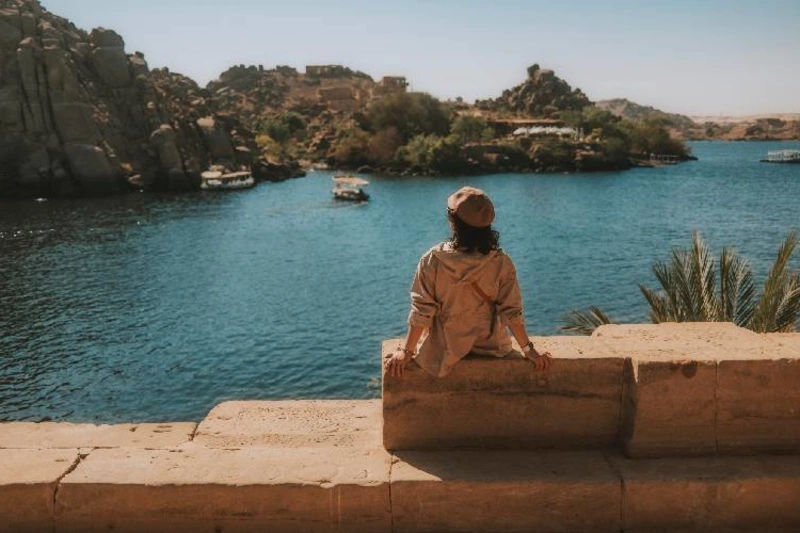
Budget around $120–$150 per adult in entry fees to cover the headline sites, and less on a cruise that includes temple entry. Prices are set in Egyptian pounds and rise often, so the dollar figures below are rounded at around 49 EGP to $1.
|
Site |
Foreign adult ticket |
Approx. in $ |
Notes |
|---|---|---|---|
|
Grand Egyptian Museum |
Around EGP 1,450 |
$30 |
Online only, timed slot |
|
Giza plateau |
Around EGP 600 |
$12 |
Pyramids and Sphinx |
|
Great Pyramid interior |
Around EGP 900 |
$18 |
Extra, limited daily numbers |
|
Karnak Temple |
Around EGP 600 |
$12 |
|
|
Luxor Temple |
Around EGP 500 |
$10 |
|
|
Valley of the Kings |
Around EGP 600 |
$12 |
Covers 3 tombs |
|
Tutankhamun's tomb |
Around EGP 700 |
$14 |
Extra on top of the valley ticket |
|
Abu Simbel |
Around EGP 820 |
$17 |
Transport extra |
Students with a valid ID card often pay around half price. Cards are accepted at many main sites, but carry some cash for tips and smaller entries. Avoid third-party sellers that mark prices up.
Do you need a visa for Egypt?
Most visitors need a visa, and a single-entry tourist visa costs around US$30 in 2026. You can apply online at the official portal, visa2egypt.gov.eg, or buy one in cash at the airport. Your passport should have at least six months' validity.
Is Egypt safe for tourists?
The UK FCDO does not advise against travel to Cairo, Luxor, Aswan or the Red Sea resorts, but it does advise against parts of North Sinai and the Libyan border area. Other governments word their advice differently, and insurance can be void if you go against official advice, so read yours before booking.
What should you wear to visit temples and mosques in Egypt?
Lightweight, loose cotton with covered shoulders and knees is the sensible choice, and it keeps you cooler in the sun too. Mosques ask for more cover, and women may need a scarf for their hair. Add a wide-brimmed hat, sunglasses, high-factor sunscreen and comfortable, closed shoes for uneven ancient stone.
Do you need to tip on a Nile cruise?
Yes, tipping is customary. Most ships collect a crew tip at the end, often in a shared envelope, and guides and drivers are tipped separately in cash. Over a ten-day trip with a private guide and a cruise, around $50–$100 per person is a realistic total. Carry small bills.
Is it worth hiring a guide in Egypt?
For the big sites, yes. A licensed Egyptologist guide turns Karnak's columns or Tutankhamun's treasures from impressive to understandable, and handles ticket queues and touts. Book through your tour operator or hotel rather than accepting offers at the gate, and agree the price and the length of the tour before you start.
Can you visit Egypt with kids?
Yes. Egypt suits families, and many ships have pools and relaxed schedules. Early starts and heat are the main challenge, so build in rest breaks, shade and water, and keep to one big outing a day. Children need their own passport and often pay reduced entry fees.

Discover the charm of Alexandria with expertly guided tours that explore the city’s rich Greco-Roman heritage, iconic landmarks, and Mediterranean beauty. From the Catacombs of Kom El Shoqafa to the grand Qaitbay Citadel, this package offers a perfect blend of history, culture, and coastal relaxation.
If you're facing any issues, our team is ready to help you directly via WhatsApp or Email.





Copyright © 2026 Nile Cruise Vacation