
Need help submitting the form?
If you're facing any issues, our team is ready to help you directly via WhatsApp or Email.
I have spoken to hundreds of travellers who come to Egypt with their eyes fixed entirely on the pyramids and the temples — and I completely understand why. But almost every single one of them, without exception, tells me the same thing when they return: the moments they remember most vividly are the ones they spent on or beside the river.
The Nile is not a backdrop to Egypt's story. It is the story. It has been flowing through this land for millions of years, and for the last five thousand of those years, human beings have been building, farming, trading, worshipping, and living along its banks. When you get out onto the water — whether on a luxury cruise ship, a centuries-old wooden sailboat, or a sleek modern watercraft — you are not just sightseeing. You are participating in something that goes back to the very beginning of recorded history.
So let me walk you through every major Nile river activity available to travellers today, from the classic to the brand new, and help you decide which ones belong on your itinerary.
There is a reason the Nile cruise has been the centrepiece of Egypt travel for over a century — it is simply one of the finest travel experiences in the world.
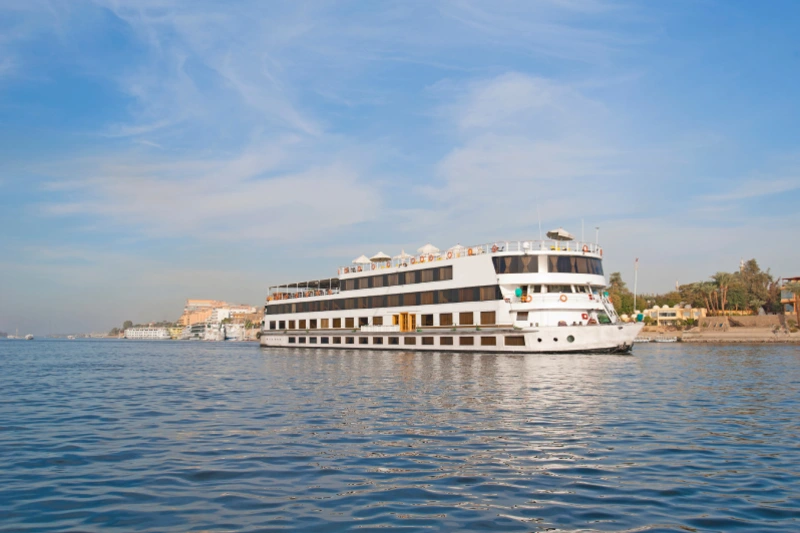
A traditional Nile cruise runs between Luxor and Aswan, covering approximately 230 kilometres of the river over three to seven nights aboard a fully equipped cruise ship. The journey moves slowly enough that you absorb the landscape — desert cliffs, green riverbanks, fishing villages, and the occasional temple visible from the water — while shore excursions bring you face to face with ancient Egypt's greatest monuments.
Key stops along a standard Luxor to Aswan cruise include:
Modern Nile cruise ships range from comfortable three-star vessels to ultra-luxury floating hotels with sun decks, swimming pools, fine dining, and Egyptologist guides on board throughout the journey.
Ideal for time-conscious travelers: Mayfair Cruises
Top choice for immersive Nile experiences: Riviera Travel
Perfect for upscale comfort and elegance: Avalon Waterways
Great for child-free relaxation: Viking Cruises
Best suited for family-friendly adventures: Uniworld Boutique River Cruises
Recommended for history enthusiasts: Original Travel
If the Nile cruise is Egypt's grand river journey, the felucca is its soul.
A felucca is a traditional wooden sailboat that has been used on the Nile for centuries — possibly millennia. It is a simple vessel: a wooden hull, a triangular lateen sail, and enough space for a small group of passengers to sit comfortably on cushioned benches while the wind does the work. There is no engine, no Wi-Fi, and no itinerary. There is just the river, the breeze, and the landscape drifting gently past.
Felucca trips are most popular in Aswan and Luxor, where the river is wide and calm and the scenery is spectacular. Short daytime trips last one to three hours and are ideal for families and travellers with limited time. For those who want a more immersive experience, overnight felucca journeys — where passengers sleep under the stars on the deck — are one of the most memorable things a person can do in Egypt.
In Aswan specifically, felucca rides often pass between the scattered islands of the Nile, including Elephantine Island, one of the oldest inhabited sites in Egypt, and Kitchener's Island, home to a lush botanical garden that feels completely at odds with the surrounding desert. Watching the sun drop behind the west bank hills from a gently rocking felucca, with nothing but the sound of the sail and the water, is an experience that is genuinely difficult to put into words.

Kayaking is one of the fastest-growing Nile river activities for travellers who want something more active and up-close than a cruise or a felucca ride — and it is available in both Cairo and Aswan, each offering a very different experience.
In Cairo, kayaking sessions are organized through licensed water sports operators along the riverfront. Paddling through the capital's stretch of the Nile is a genuinely unique urban experience — you are on the water while the city rises around you on both banks, with bridges overhead, riverside neighbourhoods in view, and the extraordinary contrast between the calm surface of the river and the energy of one of Africa's busiest cities surrounding it. Early morning sessions in Cairo are particularly atmospheric, when the light is soft and the river is relatively quiet.
In Aswan, the experience shifts entirely. The Nile here is wider, calmer, and framed by desert landscapes, granite outcrops, and scattered islands. Kayaking around Elephantine Island and through the channels near the First Cataract — the historic rocky stretch of river that marked ancient Egypt's southern boundary — is peaceful, scenic, and suited to all levels of paddling experience. The clear water, quiet surroundings, and proximity to Nubian villages make this one of the most rewarding active experiences available anywhere in Egypt.
Both destinations offer guided kayaking sessions with safety equipment provided, and the best times to paddle are early morning and late afternoon, avoiding the midday heat and catching the river at its most photogenic.

Not every place worth visiting along the Nile can be reached on foot — and that is where motorboat trips come in.
In Aswan, particularly, short motorboat rides are the only way to reach several of the river's most rewarding destinations. Elephantine Island sits in the middle of the Nile directly opposite the city and contains one of Egypt's oldest archaeological sites, along with a living Nubian village where visitors are genuinely welcomed. Kitchener's Island — also known as Plantation Island — is home to a botanical garden established in the late nineteenth century, filled with exotic plants from across Africa and Asia. The Nubian villages on the western bank are accessible only by boat and offer an authentic experience of a culture that predates the Arab influence on Egypt and has maintained its own distinct language, architecture, and traditions.
These motorboat excursions are typically short — ranging from twenty minutes to two hours — and can be arranged directly at the Aswan waterfront. They pair naturally with a felucca ride or a kayaking session to build a full day of river-based exploration.

This one I save for last because it is the newest, the most unexpected, and — judging by the reaction of everyone who tries it — arguably the most fun.
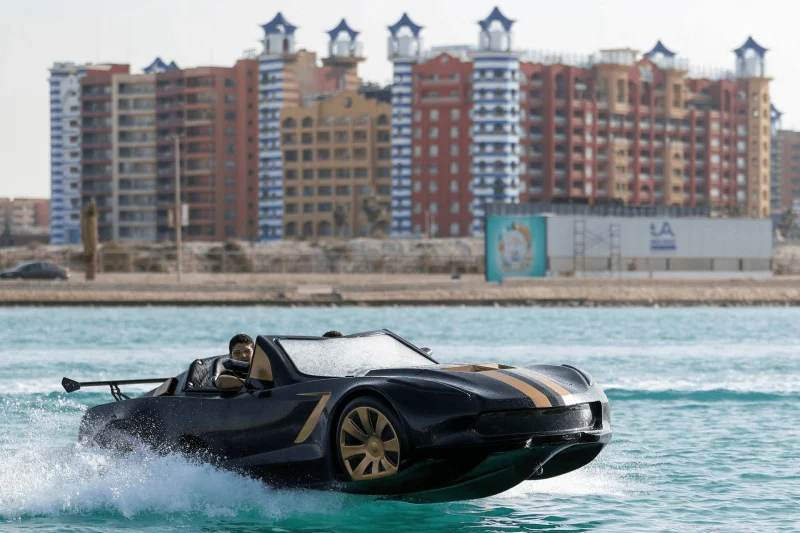
The Jets Car, sometimes called the Nile Car, is a sleek, high-speed watercraft that has been turning heads on the Cairo stretch of the river over the past few years. It sits somewhere between a jet ski and a luxury speedboat — compact enough to feel thrilling, comfortable enough to bring the whole family, and fast enough to make the Cairo skyline blur past in the most spectacular way imaginable.
What makes the Jets Car genuinely different from every other river experience is the combination it offers: the speed and excitement of a high-performance watercraft, the intimacy of a small vessel close to the water's surface, and the setting of one of the world's great urban rivers at its most dramatic. As the boat accelerates along the Nile, passengers pass landmarks including the Cairo Tower, the Qasr El Nil Bridge, and the glittering facades of the riverside hotels that line both banks — all from a perspective that no land-based tour can replicate.
The Jets Car comes with a Bluetooth sound system, so you can set the soundtrack to your own Cairo river experience, and life jackets are provided for all passengers. Sessions run in three durations — approximately 15 minutes for a quick express ride, 30 minutes for a scenic tour, and 60 minutes for a full river experience — and the activity runs daily from morning through to late evening, making it equally spectacular by day or by night when the city lights reflect off the water.
It is particularly popular as an evening activity, a celebration, or simply for anyone who wants something genuinely new — a thoroughly modern twist on a river that has been reinventing itself for five thousand years.
No one tells you these things in a brochure, so let me.
The best time to plan any Nile river activity is between October and April. During those months, temperatures along the river valley are comfortable and warm enough to enjoy the water and the open decks, cool enough to walk temple grounds without wilting. From May through September, the heat becomes genuinely extreme, often exceeding 40°C, and while the river itself is still beautiful, the experience of being on it in the middle of the day is a very different proposition.
Book in advance — especially for Nile cruises and the Jets Car. Both fill up faster than most travellers expect, particularly during the peak winter season and around Egyptian public holidays. If you are travelling as a family or in a group, locking in your river activities before you arrive will save you significant frustration on the ground.
Dress in light, breathable layers. Mornings on the water can be surprisingly cool, particularly in Aswan between November and February, while midday sun is intense even in the cooler months. A wide-brimmed hat, high-SPF sunscreen, and a light long-sleeved shirt are non-negotiable for any outdoor river activity. And carry cash; many felucca captains, local fishermen, and small-boat operators still work in Egyptian pounds and do not accept cards.
Finally, and I say this from experience: build more time into your itinerary than you think you need. The Nile has a way of slowing things down, and once you are on the water, the idea of rushing feels almost absurd.
With so many options, the most common question I hear is simple: where do I even start?
If you are visiting Egypt for the first time and have five days or more, a Nile cruise between Luxor and Aswan is the single best way to structure your time. It combines accommodation, transport, guided temple visits, and river scenery into one seamless journey, and it is the experience that most travellers look back on as the highlight of their entire trip.
If your time in Egypt is short, two or three days in Cairo, for instance, then the Jets Car gives you something genuinely exciting and memorable on the river without requiring an overnight commitment. Pair it with an evening walk along the Cairo Corniche and you have a river experience that feels both modern and deeply connected to the city around you.
If what you are looking for is stillness, something unhurried, something that feels far removed from crowds and itineraries, then a felucca afternoon in Aswan is the answer. There is nothing quite like drifting in silence past Elephantine Island as the afternoon light turns the desert gold, with no schedule to keep and nowhere else to be.
The right Nile experience is not about ticking the most boxes. It is about finding the version of the river that speaks to whatever brought you to Egypt in the first place and then giving yourself enough time to actually feel it.
The most popular Nile river activities for tourists include Nile cruises between Luxor and Aswan, traditional felucca sailboat rides, kayaking in Cairo or Aswan, motorboat trips to Nile islands, the Jets Car experience in Cairo, fishing with local communities, and evening walks along the Luxor and Aswan corniche promenades. The right activity depends on the traveller's interests, time available, and preferred pace.
A Nile cruise is a multi-day journey along the river between Luxor and Aswan aboard a cruise ship, covering approximately 230 kilometres. Cruises typically last between three and seven nights and include guided shore excursions to major ancient sites such as Karnak Temple, the Valley of the Kings, Edfu, Kom Ombo, and Philae. Modern cruise ships range from comfortable standard vessels to ultra-luxury floating hotels.
A standard Nile cruise between Luxor and Aswan typically includes visits to Karnak Temple, Luxor Temple, the Valley of the Kings, Edfu Temple, Kom Ombo Temple, and Philae Temple. Many cruises also offer optional day excursions to Abu Simbel from Aswan. These sites collectively represent some of the finest examples of ancient Egyptian architecture surviving anywhere in the world.
Yes. Most Nile river activities are suitable for families with children. Nile cruises are particularly family-friendly, offering a comfortable, safe, and educational environment. Felucca rides are calm and enjoyable for children of most ages. The Jets Car in Cairo accepts children over four years old with adult supervision. Kayaking is suitable for older children and teenagers. Corniche walks are free and accessible for all ages.
A standard Nile cruise takes place on a larger motorized ship carrying many passengers, typically on a fixed three to seven night itinerary. A dahabiya is a smaller traditional sailboat accommodating fewer guests, offering a more intimate and slower-paced journey with greater flexibility in stops and timing. Dahabiyas are generally more expensive but provide a quieter, more exclusive river experience that is increasingly popular among travellers seeking an alternative to conventional cruises.
For most Nile river activities, lightweight, breathable clothing is recommended due to Egypt's heat. A hat, sunscreen, and sunglasses are essential for daytime activities on the water, where sun exposure is intensified by reflection off the river surface. For the Jets Car and motorboat trips, comfortable casual clothing works well. For multi-day Nile cruises, smart casual evening wear is usually appropriate for onboard dining. Comfortable walking shoes are important for shore excursions to temple sites.
Nile river activities can be booked through licensed Egyptian tour operators, directly through hotel concierge services, or via established travel platforms. For Nile cruises, booking in advance is strongly recommended, particularly for travel during the peak November to February season. The Egyptian Ministry of Tourism and Antiquities (egypt.travel) maintains a directory of licensed operators. For international travel planning resources, UNESCO's Egypt heritage pages (whc.unesco.org) provide additional context on the sites visited during river activities.

Discover Egypt's hidden Nile on our Cairo & Dahabiya Nile cruise — El Kab, Gebel Silsila & Sheikh Rehan Island. Request your 8-day Egypt itinerary now!

Explore Cairo & Nile Cruise Package on our 7-day Egypt itinerary. Pyramids, Philae Temple, Valley of the Kings & Karnak included. Private guides. Inquire today!

Looking for the best 8 day Egypt tour? Explore pharaonic temples, royal tombs & sail the Nile in luxury. Family-friendly & fully private. Inquire today!
Our Egypt vacation package has everything: Pyramids, Nile Cruise, Valley of Kings & Sharm's beaches. Trusted by thousands. Request your free quote today!
If you're facing any issues, our team is ready to help you directly via WhatsApp or Email.




Copyright © 2026 Nile Cruise Vacation